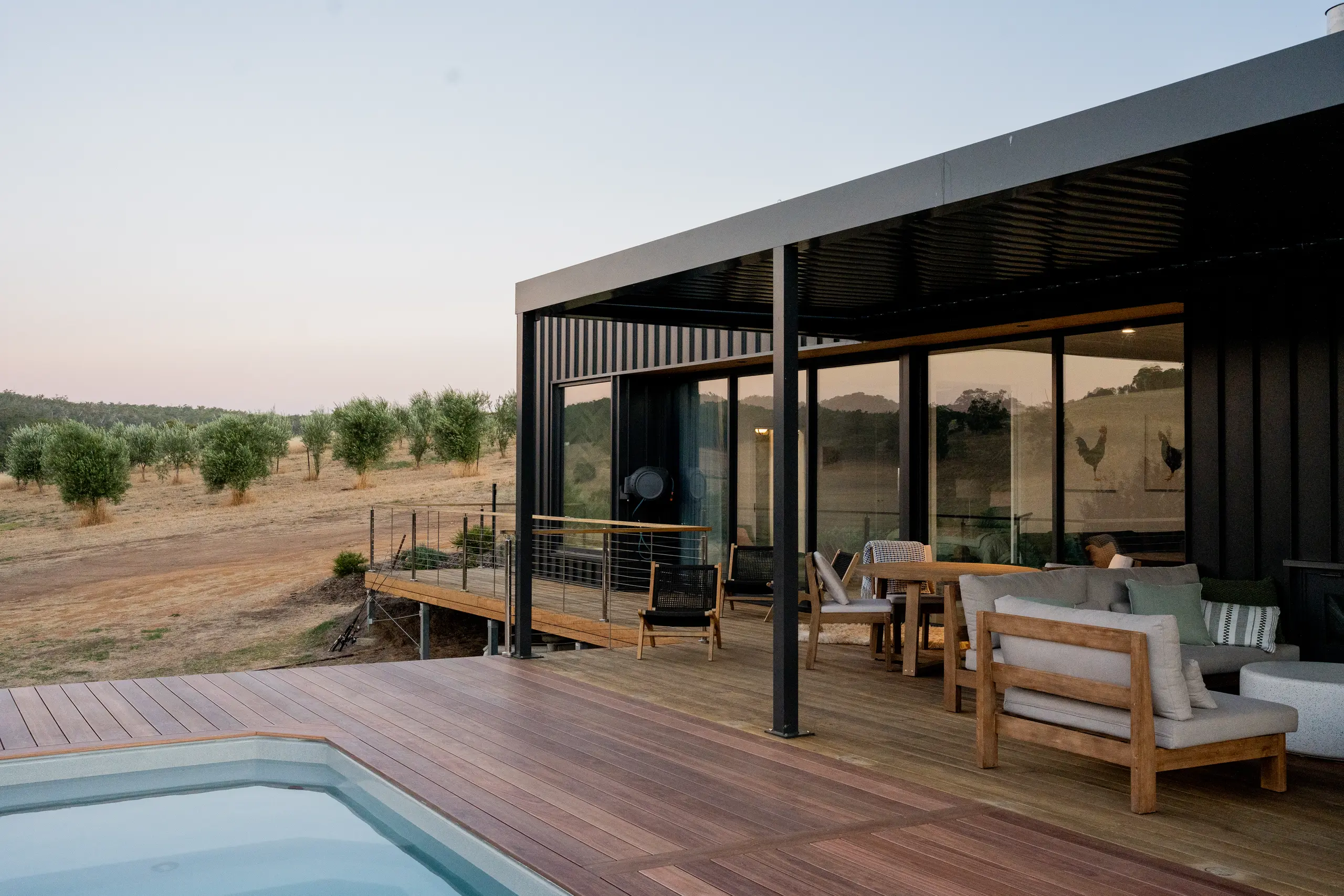
A modular home is a fully built house constructed in sections within a factory and assembled on site. Unlike traditional builds, modules are precision-engineered to meet local standards and regulations, then joined together to form a complete dwelling.
Modular homes are durable, customisable, and fully compliant, while offering faster, more predictable construction timelines compared to traditional builds.
Key characteristics of what makes a true modular home
Off-site construction
A true modular home is built in a controlled factory environment, where each module is precisely engineered. Off-site construction allows for consistent quality, reduced weather-related delays and minimal on-site disruptions.
This methodology ensures components fit together perfectly when assembled on location, reducing your waste and supporting structural integrity.
Permanent structure
Unlike temporary or relocatable buildings, modular homes have been designed for permanent installation on a foundation. They meet the same local building codes and regulations as traditional homes, guaranteeing their durability, long-term performance and structural reliability.
Once assembled, a modular home is indistinguishable from a conventionally constructed building.
Speed and efficiency
Factory construction significantly shortens build timelines. While traditional build sites are beholden to weather delays and sequential trade scheduling, modular homes are built in parallel with site preparation.
This process drastically reduces project duration, allowing homeowners to move in sooner without compromising on quality or craftsmanship.
Customisation
Modular homes, by nature, offer extensive design flexibility. Buyers can choose layouts, finishes, fixtures and architectural features to suit their personal style and practical needs.
Because modules are pre-engineered, custom elements can be integrated seamlessly without the delays or prohibitive pricing typical of bespoke on-site construction.
The procedure of building a modular home
Planning and design
The process begins with comprehensive planning. Homeowners collaborate with our designers to choose layouts, finishes and configurations. Detailed plans are drawn, engineering approvals are obtained, and council permits are secured, ensuring the home meets all building codes and site requirements before construction begins.
Module fabrication
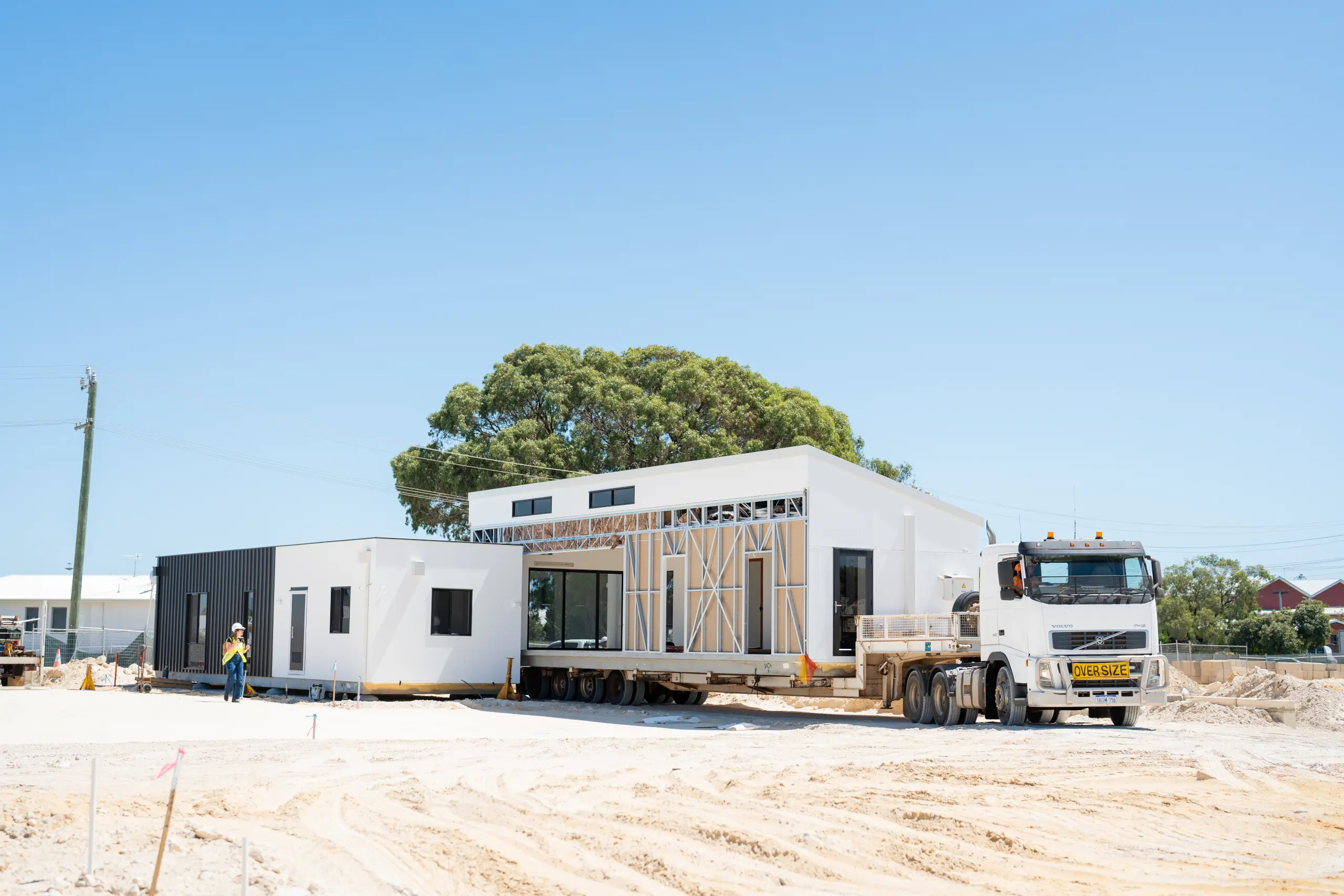
Modules are built off-site in a controlled factory environment. Walls, floors, roofs, and often internal fixtures are constructed with precision, enabling the simultaneous assembly of multiple modules. Factory conditions ensure stringent quality control, reduce weather-related delays and maximise efficiency when compared to a conventional build.
Site preparation
While the modules are being fabricated, the building site is being prepared. This includes laying the foundation, installing all necessary utilities, and preparing the landscaping. Accurate site preparation is crucial to ensuring modules fit perfectly and assembly proceeds smoothly.
Transport and assembly
Completed modules are transported to the site using specialised vehicles. Cranes or lifting equipment position them onto the foundation, where they’re joined together. Connections for plumbing, electrical and HVAC systems are made while the structure is secured, forming a complete, stable home.
Finishing and inspection
After assembly, final external and internal finishes are completed, including cladding, painting, flooring and fixtures. The home undergoes thorough inspections to ensure compliance with building standards. Once approved, the modular home is ready for occupancy, offering the same durability and comfort as a traditionally built home.
Benefits of modular vs traditional builds
Speed
Modular construction is significantly faster, thanks to most of the work occurring off-site in a controlled factory environment, often in parallel with any site preparation. A MIRA modular home can typically be completed in 12-22 weeks, compared to the 6-12 (or more) months for a traditional build.
Cost efficiency
While not always cheaper, modular homes tend to be more cost-effective due to reduced on-site labour, streamlined scheduling, and minimal material waste. Fixed pricing also reduces the risk of any unexpected cost blowouts all too common in conventional builds.
Sustainability
Modular homes are built with the environment in mind. The controlled construction reduces material waste by up to 80% and limits unnecessary site disturbance. Additionally, modules can be engineered with more insulation and energy-efficient materials, lowering your heating and cooling requirements.
Design flexibility
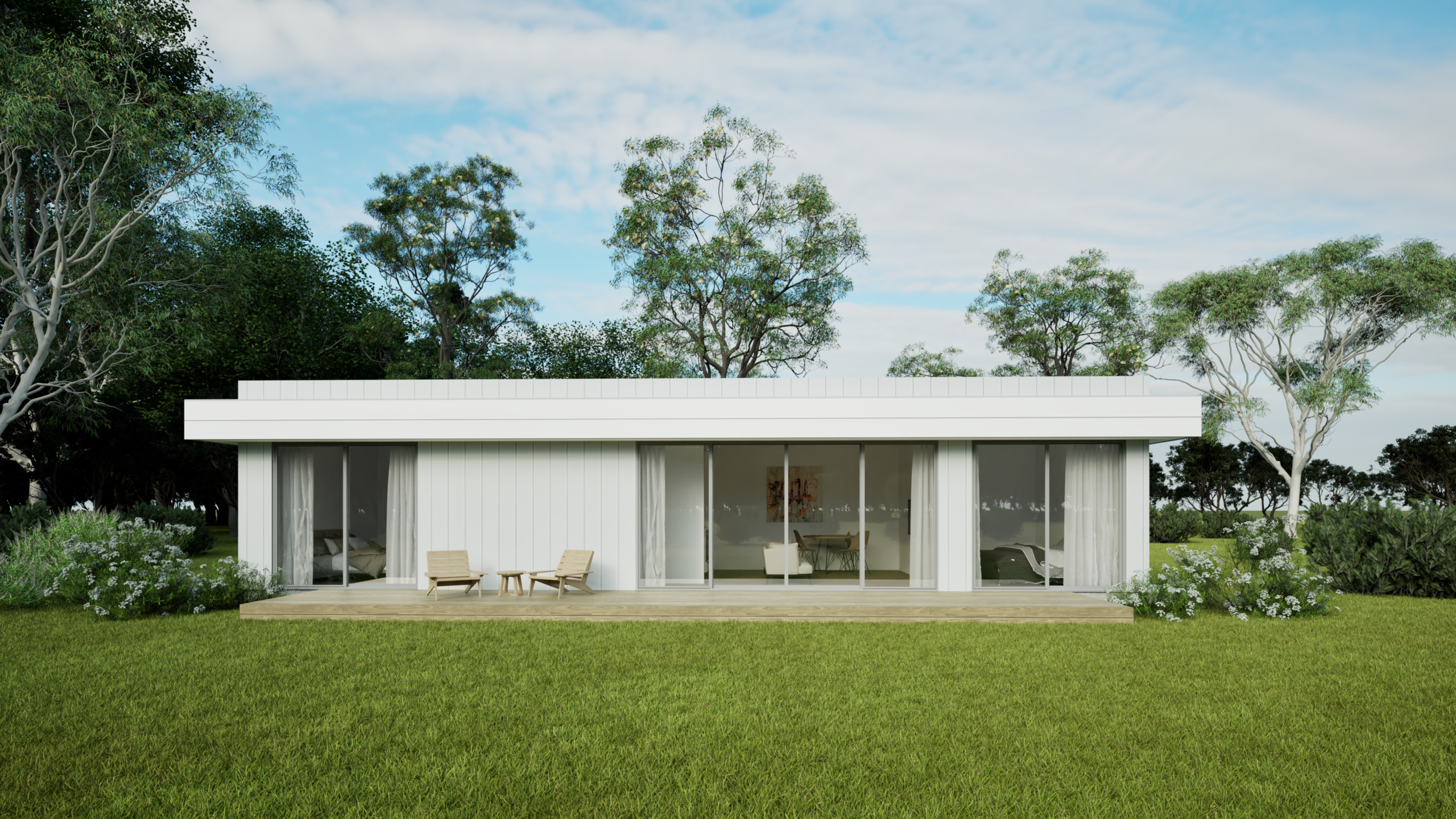
Modern modular homes range from small studios to multi-storey family homes, with layouts, finishes and architectural styles as customisable as traditional builds. Prefabrication doesn’t limit creativity; modular homes can look as bespoke and stylish as any site-built residence.
Common misconceptions about modular homes vs. reality
Low quality and durability
Myth: Factory-built homes are flimsy or lower quality than traditional builds.
Reality: Modular homes are built to the same building codes as conventional site-built houses. The modules are constructed in a factory to precise standards, ensuring its strong and durable enough to be transported safely to site. This process also improves quality and longevity, resulting in a home that performs just as well, if not better than, traditional construction.
Generic or “boxy” designs
Myth: Modular homes all look identical or lack architectural style.
Reality: Modern modular homes are highly customisable. They can range from contemporary open-plan layouts to luxury beach houses or traditional country cottages with gabled roofs or verandahs. Modular construction allows homeowners to choose finishes and layouts that suit their lifestyle while maintaining efficiency and build quality.
They depreciate in value
Myth: Modular homes lose value over time, similar to vehicles or mobile homes.
Reality: Modular homes are permanent structures built on fixed foundations, just like traditional site-built houses. Because they meet the same building codes and use durable materials, they continue to maintain their structural integrity and appeal. Over time, modular homes tend to appreciate at a rate similar to that of conventional homes.
Financing is impossible:
Myth: Banks won’t provide mortgages for modular builds.
Reality: Most major banks and lenders finance modular homes that meet local building codes and serve as permanent residences. Loan structures may vary, as some lenders release funds only after installation, but obtaining finance is generally straightforward and comparable to that for traditional builds.
They’re just shipping containers:
Myth: Modular homes are just repurposed shipping containers.
Reality: While container homes are a form of prefab, most modular homes are purpose-built with high-quality materials, such as steel frames or timber. Modular homes offer superior design flexibility, energy efficiency and durability compared to standard containers. They offer the benefits of prefabrication without compromising on long-term value.
Why modular?
Modular homes offer a smarter approach to construction by combining off-site precision with permanent, fully compliant construction. They deliver faster completion times, reduce on-site waste and allow extensive customisation of layouts and finishes without compromising quality or durability, shaping the future of residential design in Australia.
This method provides a home that fits modern lifestyles, supports sustainability and holds long-term value, making modular living an increasingly practical and attractive choice for homeowners in Western Australia.